
Are you tired of the 9-to-5 grind? Do you want to earn money from home on your own terms? Freelancing could be exactly what you are looking for. Thousands of people across India are already doing freelance work online from small towns in UP to metro cities like Bengaluru and Mumbai and building careers that give them both income and freedom.
This guide covers everything you need to know about what is freelancing, how it works, which skills are in demand, where to find clients, and how to actually get started in 2026. Whether you are a student, a working professional, or a homemaker, this guide is for you.
What is Freelancing?
Let’s start from the very beginning.
Freelancer Meaning
A freelancer is a self-employed person who offers their skills and services to clients on a project-by-project basis. A freelancer does not work for one company full-time. Instead, they work with multiple clients at the same time or one at a time, depending on their preference.
Think of it this way. A regular employee gets a fixed monthly salary and works for one employer. A freelancer charges per project or per hour and chooses who they want to work with. No boss. No office politics. No fixed schedule.
Freelancing Meaning
Freelancing means working independently for different clients without being tied to a single employer. It is a work arrangement where you sell your skills directly to people or businesses who need those skills temporarily or on a recurring basis.
Freelancing is not a side hustle for everyone. Many people in India and around the world do freelancing as their full-time career and earn more than most salaried employees.
What is Freelance Work?
Freelance work is any task or project you complete for a client in exchange for payment. It can be a one-time job like designing a logo or a long-term engagement like managing social media for a business every month.
Freelance work online means doing this work remotely, using a laptop and internet connection. You can be sitting in Patna and working for a client based in New York. That is the beauty of online freelancing.
Freelancer Jobs Meaning
Freelancer jobs are project-based tasks posted by clients on freelancing platforms or directly offered to independent professionals. These jobs span almost every industry from content writing and web development to video editing and consulting.
When someone says “freelancer jobs,” they usually mean the opportunities available on platforms like Upwork, Fiverr, or Freelancer.com where clients post their requirements and freelancers apply or get discovered.
How Does Freelancing Work?
The freelancing process is straightforward once you understand it. Here is how a typical project goes from start to finish.
Step 1: Client Posts a Project
A business owner, startup, or individual needs help with something, maybe a website, a translated document, or a marketing campaign. They post a project on a freelancing platform with details about what they need, their budget, and their timeline.
Step 2: Freelancer Sends a Proposal
You, as the freelancer, see this project and send a proposal. The proposal explains why you are the right person for the job, what you can deliver, and how much you will charge. A strong proposal is specific, professional, and shows that you understand the client’s problem.
Step 3: Project Discussion
If the client likes your proposal, they reach out to discuss the project in more detail. This is where you clarify expectations what exactly needs to be done, how many revisions are included, what the exact deadline is, and how payment will work.
Step 4: Payment Process
Most freelancing platforms hold the client’s payment in escrow before you start working. This protects both sides. The client knows you will not disappear with the money. You know the money is there before you invest your time.
Step 5: Delivery and Review
You complete the work and deliver it to the client. The client reviews it, requests any revisions if needed, and approves the final work. The platform then releases the payment to you. Both parties leave reviews, which build your reputation for future projects.
Struggling to Find Freelance Clients?
Landing high-paying clients doesn’t have to be difficult. Dorak helps freelancers discover proven client acquisition strategies, outreach methods, and growth techniques to build a steady pipeline of projects.
✅ Proven Client Acquisition Methods
✅ Cold Email & LinkedIn Outreach
✅ Freelance Platform Strategies
✅ Practical Tips for Beginners & Professionals
👉 Start Getting More Freelance Clients: https://dorak.io/get-freelancing-clients/
Types of Freelance Jobs
The freelance market is vast. There is something for almost every skill set. Here are the most popular categories of freelance work in India right now.
Writing and Content Creation
Content writing is one of the most accessible forms of freelance work. Businesses need blog posts, website copy, product descriptions, email newsletters, social media captions, and more. If you can write clearly and engage readers, this is a great starting point.
Subcategories include blog writing, copywriting, technical writing, ghostwriting, scriptwriting, and proofreading.
Graphic Design
Graphic designers create visual content for brands — logos, social media graphics, brochures, packaging, presentations, and more. Tools like Adobe Illustrator, Photoshop, Canva, and Figma are commonly used. This is a high-demand skill with great income potential.
Programming and Web Development
Developers are always in demand. Whether it is building websites, creating mobile apps, fixing bugs, or developing custom software, clients pay well for technical expertise. Popular skills include Python, JavaScript, React, Flutter, PHP, and WordPress development.
SEO (Search Engine Optimisation)
Businesses want to rank on Google. SEO freelancers help them do that by optimising websites, doing keyword research, building backlinks, and improving site structure. It is one of the highest-paying freelance categories when you become good at it.
Digital Marketing
Digital marketers run paid ads (Google, Facebook, Instagram), manage email campaigns, create marketing strategies, and help businesses grow online. Every business with an online presence needs digital marketing help.
Video Editing
With YouTube, Instagram Reels, and short-form content booming, video editors are in high demand. If you can use tools like Adobe Premiere Pro, DaVinci Resolve, or even CapCut, you can find clients easily.
Data Entry and Virtual Assistance
These are perfect entry points for beginners who are not yet specialised in a technical skill. Data entry, research, email management, scheduling, and admin support are tasks businesses outsource regularly.
AI Services
This is the newest and fastest-growing category. Businesses need help with AI prompt writing, AI content editing, training data creation, AI tool integration, and chatbot setup. If you understand AI tools, this is one of the best opportunities in 2026.
Skills Required to Become a Freelancer
You do not need a college degree to start freelancing. But you do need skills — both technical and soft skills.
Technical Skills
Technical skills are the core service you offer. Depending on your field, these include:
- Writing: grammar, research, SEO knowledge, storytelling
- Design: typography, colour theory, software proficiency
- Development: coding languages, frameworks, databases
- Marketing: analytics, ad platforms, conversion optimisation
- Video: editing software, transitions, colour grading
Pick one area and go deep into it before moving to others.
Soft Skills
Soft skills are often what separate average freelancers from great ones. Clients remember how you made them feel, not just the work you delivered.
Communication
Clear communication is everything in freelancing. You need to explain what you can do, understand what the client wants, and keep them updated during the project. Most failed freelance projects are not because of bad work — they are because of poor communication.
Reply to messages promptly. Write professional emails. Ask the right questions before starting. These habits build trust faster than anything else.
Time Management
You manage your own time when you freelance. There is no manager checking on you. You have to plan your work, meet deadlines, and balance multiple clients without burning out.
Use tools like Google Calendar, Notion, or Trello to stay organised. Set realistic deadlines and always deliver on time. Punctuality in freelancing is your professional reputation.
Best Freelance Websites to Find Work
You need a platform to find clients, especially when you are just starting out. Here is a quick overview of the top freelance websites for Indian freelancers.
Upwork
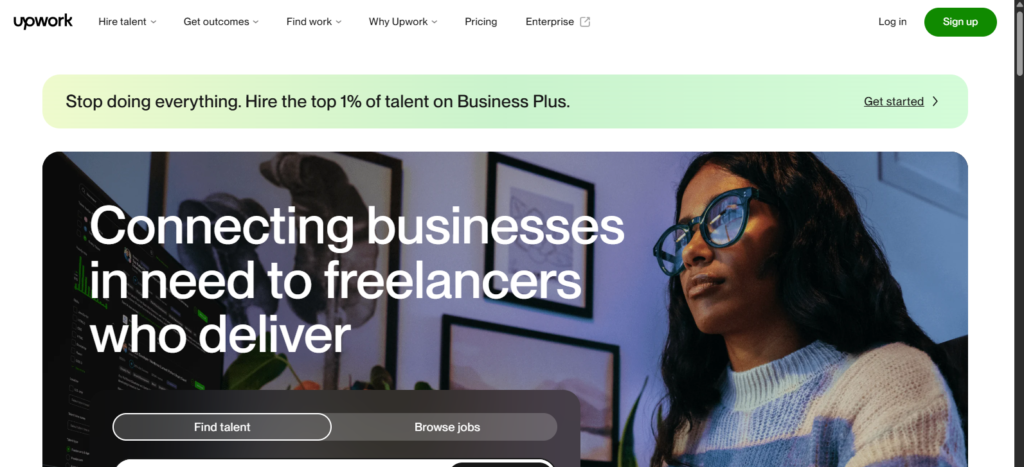
Upwork is the world’s largest freelancing platform. It connects professionals with clients from the US, UK, Europe, and Australia. Competition is high, but so are the rates. Great for experienced freelancers or those with a specific skill. Payments come in USD, which is a big advantage if you are earning in Indian rupees.
Fiverr
Fiverr works differently. Instead of bidding on projects, you create “gigs” — fixed-price service packages that clients can buy directly. It is beginner-friendly and great for services like logo design, voiceovers, translations, and content writing. Many Indian freelancers earn full-time income from Fiverr alone.
Freelancer.com
Freelancer.com has a huge range of project categories and is easy to sign up for. You bid on projects posted by clients. It is good for beginners to practice writing proposals and build early experience.
Guru
Guru is a solid platform especially for long-term contracts. It has a clean interface and offers a good mix of short-term gigs and ongoing work. Good for developers, designers, and project managers.
Toptal
Toptal is for the top 3% of freelancers. The screening process is rigorous, but if you get in, you work with high-quality clients at premium rates. Best suited for senior developers, designers, and finance professionals.
PeoplePerHour
PeoplePerHour is popular among UK-based clients. It is a good platform if you want to target European markets. Proposals and hourly rates are common here.
Truelancer
Truelancer is India-specific and great for beginners. Rates are lower than Upwork or Fiverr, but it is easier to get your first project here. Good for building early confidence and reviews.
Want a detailed breakdown of each platform with tips to rank your profile? Check out our complete guide to the best freelancing websites in India.
How to Start Freelancing: Step-by-Step
This is the part most beginners struggle with. Knowing about freelancing is one thing. Actually starting is another. Here is a clear, actionable path to get your first client.
Step 1: Choose Your Skill
Do not try to offer everything. Pick one specific skill that you have or can develop quickly. Think about what you already know, what you enjoy doing, and what people are willing to pay for.
If you are starting from zero, writing, graphic design, data entry, and social media management are the easiest to learn and start offering quickly.
Step 2: Learn and Practise
Spend 30 to 60 days getting genuinely good at your chosen skill. Use free resources — YouTube, Coursera, Google’s free certifications, HubSpot Academy — to build real knowledge. Do not just watch tutorials. Practice by doing real projects, even fake ones for your portfolio.
Step 3: Build a Portfolio
Clients want proof before they hire you. A portfolio is your proof. Create 3 to 5 sample projects that show what you can do. If you are a writer, write 3 sample blog posts. If you are a designer, design 3 sample logos or social media posts. If you have done any work for anyone — even a friend or a local business for free — include it.
Quality over quantity. Three excellent samples are better than ten average ones.
Step 4: Create Your Profile
Set up profiles on 2 to 3 freelancing platforms. Your profile is your online resume. Make sure it has:
- A professional photo (not a selfie)
- A clear headline that describes what you do
- A bio that focuses on the client’s benefits, not your background
- Your portfolio samples
- Any relevant certifications
Keep it simple, clear, and client-focused.
Step 5: Write Winning Proposals
When you apply for projects, write proposals that address the client’s specific problem. Do not send copy-paste templates. Read the job post carefully and show that you understood it.
A good proposal structure:
- Start with the client’s problem, not yourself
- Briefly explain how you will solve it
- Mention one relevant example from your portfolio
- State your price and timeline
- End with a simple question to open a conversation
Keep it short. Clients read dozens of proposals. A focused 150-word proposal beats a generic 500-word one every time.
Step 6: Land Your First Client
Your first client is the hardest to get. Here are a few ways to speed up the process:
- Offer a small discount for your first 2 or 3 projects to get reviews fast
- Apply to smaller, less competitive projects first
- Tell people in your network — friends, family, local businesses — that you offer these services
- Join Indian freelancer communities on Facebook, LinkedIn, and Reddit where people share leads
Once you have 3 to 5 reviews, things start moving much faster.
How Much Can Freelancers Earn in India?
This is the question everyone wants answered. The honest answer is: it depends entirely on your skill, your clients, and your effort. But here are some real numbers to give you a realistic picture.
Earning from Indian Clients
If you work with Indian clients, rates tend to be lower. Here is a rough range:
- Content writer: ₹1 to ₹5 per word (₹15,000 to ₹50,000/month)
- Graphic designer: ₹5,000 to ₹30,000 per project
- Web developer: ₹15,000 to ₹1,00,000 per project
- Social media manager: ₹10,000 to ₹40,000/month per client
- Data entry: ₹8,000 to ₹20,000/month
Earning from International Clients
Working with clients in the US, UK, Canada, and Australia changes everything. The same work pays 5 to 10 times more because of currency differences.
- Content writer: $0.05 to $0.30 per word ($500 to $3,000/month)
- Graphic designer: $100 to $2,000 per project
- Web developer: $500 to $10,000+ per project
- SEO specialist: $500 to $3,000/month per client
- Digital marketer: $500 to $5,000/month
Real Income Examples
- A beginner content writer from Lucknow earns ₹25,000/month after 6 months on Fiverr
- A mid-level web developer from Pune earns $2,000/month from 3 Upwork clients
- An experienced SEO specialist from Chennai earns $5,000/month working with US clients
- A logo designer from Jaipur earns ₹80,000/month from a mix of Fiverr and direct clients
These are not exceptional cases. These are normal outcomes for people who take freelancing seriously and stay consistent for 6 to 12 months.
Freelancing Pros and Cons
Freelancing is great, but it is not perfect. Here is an honest look at both sides.
Advantages of Freelancing
Freedom to choose your work. You decide which projects to take and which ones to decline. You can specialise in what you love.
Work from anywhere. You can work from home, a cafe, or a hill station. All you need is a laptop and internet.
Income potential without a ceiling. There is no fixed salary. As your skills grow and your reputation builds, your rates can keep going up.
Multiple income streams. You can have 3 to 5 clients at the same time, which is more financially stable than depending on one employer.
Skill growth. You constantly work on diverse projects, which makes you sharper and more adaptable than someone who does the same job every day.
Better work-life balance. You choose your hours. If you want to take a Wednesday off and work on Saturday, you can.
Disadvantages of Freelancing
Income is inconsistent, especially in the beginning. Some months are great. Some months are slow. You need savings to manage the dry spells.
No benefits. No provident fund, no health insurance, no paid leaves. You have to manage these yourself.
Client hunting never stops. Getting clients is part of the job. Even experienced freelancers spend time on business development.
Isolation. Working from home alone can feel lonely. You miss the social aspect of an office environment.
Self-discipline is required. Distractions at home are real. If you cannot manage your own time and motivation, freelancing gets difficult.
Tax and accounting. You are responsible for filing your own taxes. Many freelancers hire an accountant once their income grows.
Common Mistakes Beginners Make
Most freelancers make the same mistakes early on. Avoid these and you will be ahead of 80% of beginners.
Pricing Too Low
Many beginners think charging less will help them get more clients. This is a trap. Extremely low prices attract difficult clients who still ask for endless revisions. They also make it nearly impossible to earn a sustainable income. Charge what your work is worth. Start reasonably, but do not undervalue yourself just to get a project.
Poor Communication
Missing messages, vague updates, and delayed replies are the fastest ways to lose a client. Even if your work is excellent, bad communication creates doubt. Set expectations early, respond within 24 hours, and keep clients informed about progress.
No Portfolio
Walking into a proposal without a portfolio is like applying for a job without a resume. Clients want to see what you can do. Even if you have to create 3 sample projects for yourself, have something to show.
Not Collecting Reviews
Reviews are your social proof. After every successful project, ask the client for a review. Most happy clients are willing to leave one; they just need a gentle reminder. Early reviews are the engine that builds your freelancing career.
Taking on Too Much Too Soon
Beginners sometimes say yes to everything out of fear of missing income. But taking on more than you can handle leads to late deliveries, poor quality work, and bad reviews. It is better to do three projects extremely well than to rush through six.
10 Tips for Success as a Freelancer in India
These are not generic tips. These are things that actually make a difference.
1. Pick a niche, not a category. Instead of being a “graphic designer,” be a “social media graphic designer for fitness brands.” Specificity gets you better clients and higher rates.
2. Treat your profile like a landing page. Your profile should sell you, not just describe you. Focus every line on what the client gets.
3. Follow up on proposals. If you sent a proposal and heard nothing in 3 days, send one short, polite follow-up message. Many projects are won in the follow-up.
4. Always deliver a little more than promised. If the client expected one revision, give two. If the deadline was Friday, deliver Thursday. These small things create loyal clients.
5. Build a simple personal website. A personal website with your portfolio, services, and contact form makes you look professional and helps clients find you outside of freelancing platforms.
6. Network in your field. Join LinkedIn groups, Twitter/X communities, and Discord servers in your niche. Many freelancers get clients from networking, not just platforms.
7. Keep learning every month. The freelance market changes fast. Spend a few hours every month learning new tools, techniques, or trends in your field.
8. Raise your rates every 6 months. As you gain experience and reviews, increase your prices. Most freelancers keep charging the same rates for years and leave a lot of money on the table.
9. Save before spending. Freelance income is variable. Save 3 to 6 months of expenses before treating your freelance income like a regular salary.
10. Build relationships, not just transactions. The best freelance clients are ones who come back again and again. Focus on building trust, not just completing tasks. A single great client relationship can sustain your freelancing for years.
Frequently Asked Questions (FAQs)
1. What is freelancing in simple words?
Freelancing means working independently for different clients instead of being employed by one company. You offer your skills as a service and get paid per project or per hour.
2. What is freelancing meaning in Hindi?
Freelancing ka matlab hai swatantra roop se kaam karna – jahan aap apne khud ke boss hote hain, alag-alag clients ke liye project-basis pe kaam karte hain, bina kisi ek company ka permanent employee bane.
3. Is freelancing good for beginners in India?
Yes, absolutely. India has a large pool of skilled professionals and a strong internet infrastructure. Platforms like Fiverr and Truelancer make it easy for beginners to start. The key is to pick one skill, build a portfolio, and stay consistent.
4. How much can a beginner freelancer earn in India?
A beginner can realistically earn ₹10,000 to ₹30,000 per month in the first 3 to 6 months. With experience and better clients, that number can grow to ₹1 lakh or more per month.
5. Which skill is best for freelancing in India in 2026?
The most in-demand skills in 2026 are web development, SEO, content writing, video editing, graphic design, and AI-related services. All of these have strong demand from both Indian and international clients.
6. Can I do freelancing without experience?
Yes. Many successful freelancers started with zero experience. They learned a skill, built a portfolio of sample work, and started applying for small projects. The first project is always the hardest, but it gets easier from there.
7. What is the best freelancing website for Indians?
Fiverr and Upwork are the best for earning in USD. Truelancer and Freelancer.com are good for starting out. The best platform depends on your skill and the type of clients you want.
8. How do freelancers get paid in India?
Most platforms support PayPal, Payoneer, and direct bank transfers. Many Indian freelancers use Payoneer or Wise to receive international payments in USD and then transfer to their Indian bank accounts at a better exchange rate.
9. Is GST required for freelancers in India?
If your annual income from freelancing exceeds ₹20 lakh (₹10 lakh for some states), GST registration is required. For international clients, the service is zero-rated under GST. Consult a CA if you are unsure.
10. Can I do freelance work from home in India?
Absolutely. Most freelancing is done entirely online. You need a laptop, a good internet connection, and the right skills. Many Indian freelancers work from tier-2 and tier-3 cities without any issues.
11. How long does it take to get the first client?
This varies. With a strong profile and consistent proposals, most beginners get their first client within 2 to 6 weeks. Your first 3 to 5 reviews are the biggest milestone.
12. Do I need to know English to freelance?
For international clients, yes, basic to intermediate English is important. For Indian clients, you can freelance in Hindi as well, especially for writing, translation, and local marketing services.
13. What is the difference between a freelancer and a consultant?
A freelancer typically executes work writing, designing, coding. A consultant advises on strategy and direction. In practice, experienced freelancers often move into consulting as they build expertise. The line is blurry for many professionals.
14. Can students do freelancing in India?
Yes. Many college students in India freelance on the side and build skills and income simultaneously. Content writing, graphic design, social media, and data entry are popular among students.
15. How do I avoid scams on freelancing platforms?
Always use the platform’s payment system; never move to WhatsApp payments or bank transfers with unknown clients. Check client reviews before accepting work. Be cautious of clients who offer very high pay for very little work upfront; these are usually red flags.
Final Thoughts
Freelancing is not a get-rich-quick scheme. It is a real career path that rewards skill, consistency, and professionalism. Thousands of people across India, from students and fresh graduates to experienced professionals are building sustainable livelihoods through freelance work online.
The best time to start was yesterday. The second best time is today. Pick your skill, build your portfolio, create your profile, and send your first proposal this week.
You do not need to be perfect to start. You just need to start.
Supercharge Your Productivity with Dorak
Looking for free tools to simplify your work? Whether you’re a freelancer, marketer, writer, developer, or student, Dorak offers 100+ free online tools to help you create content, improve SEO, streamline development tasks, and get more done without spending a penny.
✨ Fast • Secure • Free Forever
👉 Explore All Free Tools on Dorak.io